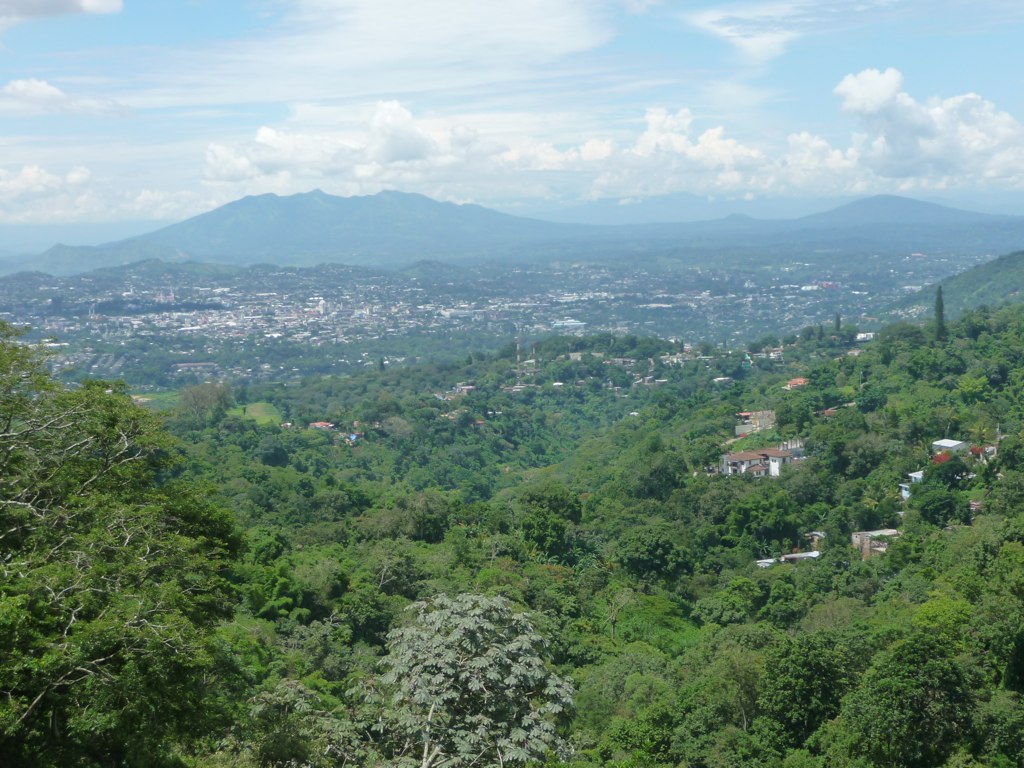
Whenever I get back from El Salvador, I start to think about the world and my place in it. I am always struck by the colorful and contrasting sights of El Salvador—the green rolling hills lined with communities of tin shacks; the street vendors, with their beautiful displays of coconuts, dressed in grimy rags; the children on the street peering up at me, their eyes indescribably brown and deep, their cheeks inevitably smudged with dirt and soot.
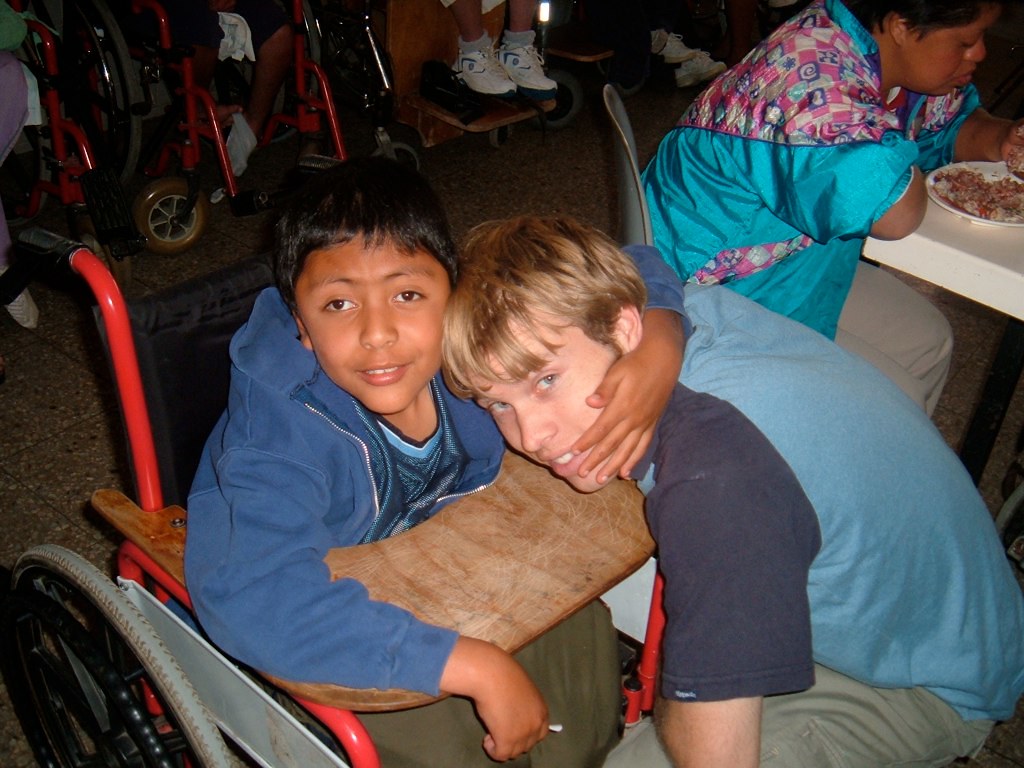
When I walk into the Hogar, I don’t see rags and shacks, litter and dirt-smudged cheeks. I see happy kids with happy lives.
Sometimes, that makes me feel guilty.
Why do I go to the kids of the Hogar, bringing crayons and games and friendship, when so many others in El Salvador are suffering—perhaps even more than those within the safe walls of the Hogar? Should I be spending my time and resources on other children?
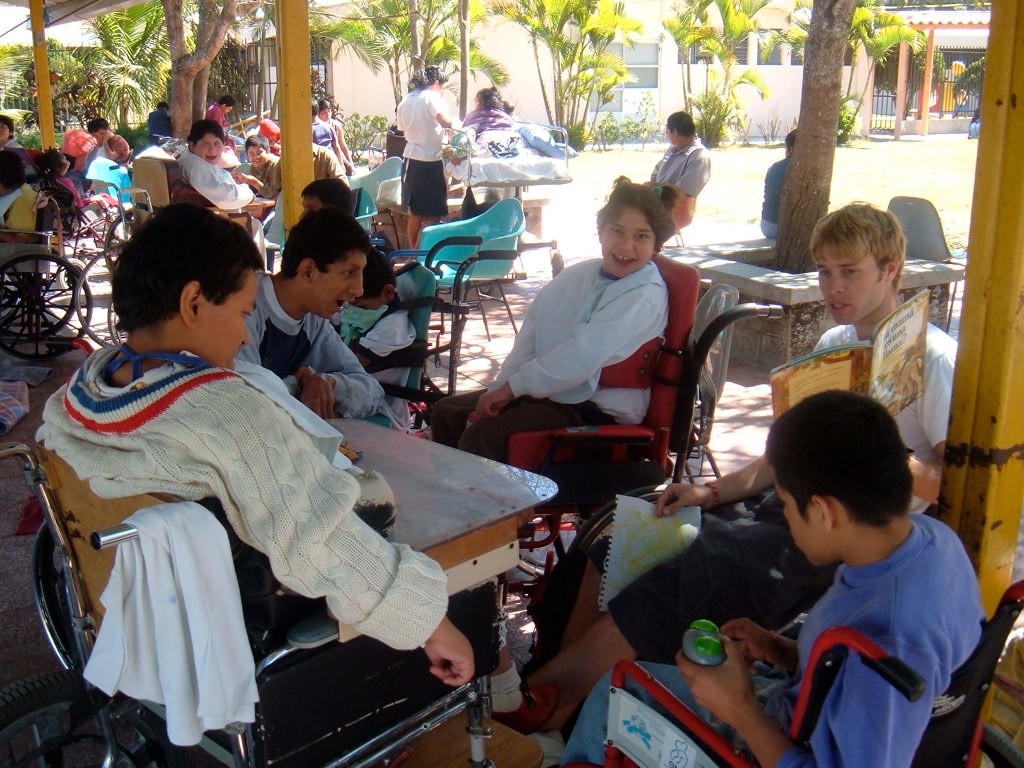
In my many years of working with persons with disabilities, I’ve found one thing to be true: In general, persons with disabilities are happy. It’s in their nature. That is certainly true for the residents of the Hogar. In spite of their physical and mental challenges, they never stop smiling. They have food, shelter, clothes, friends, and adults who love them (the workers). They are content.
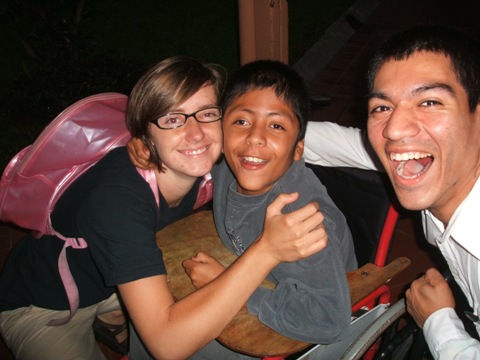
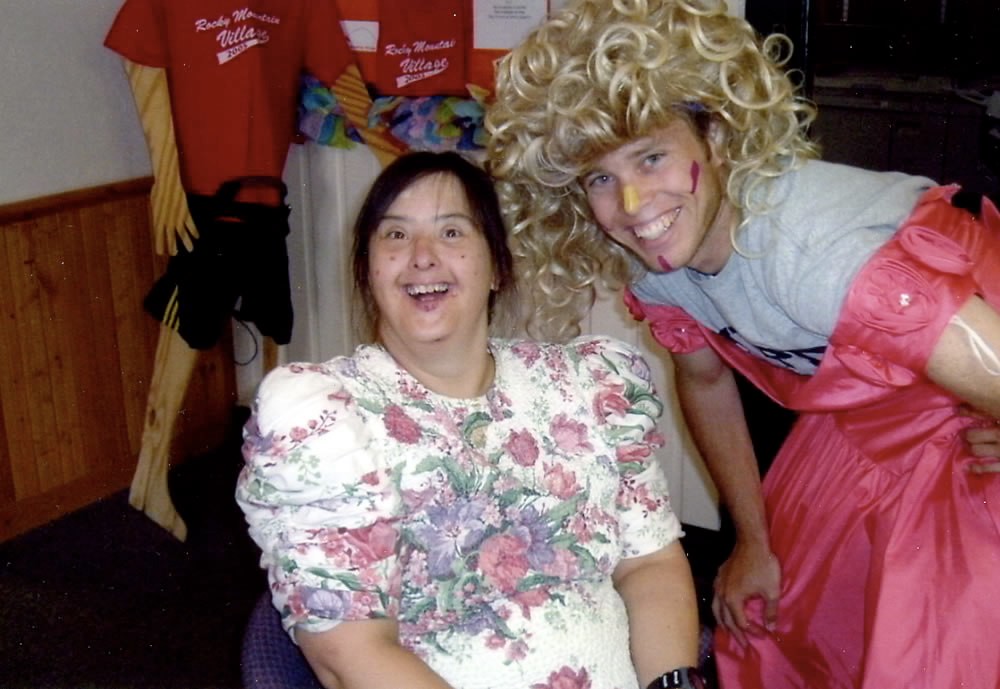
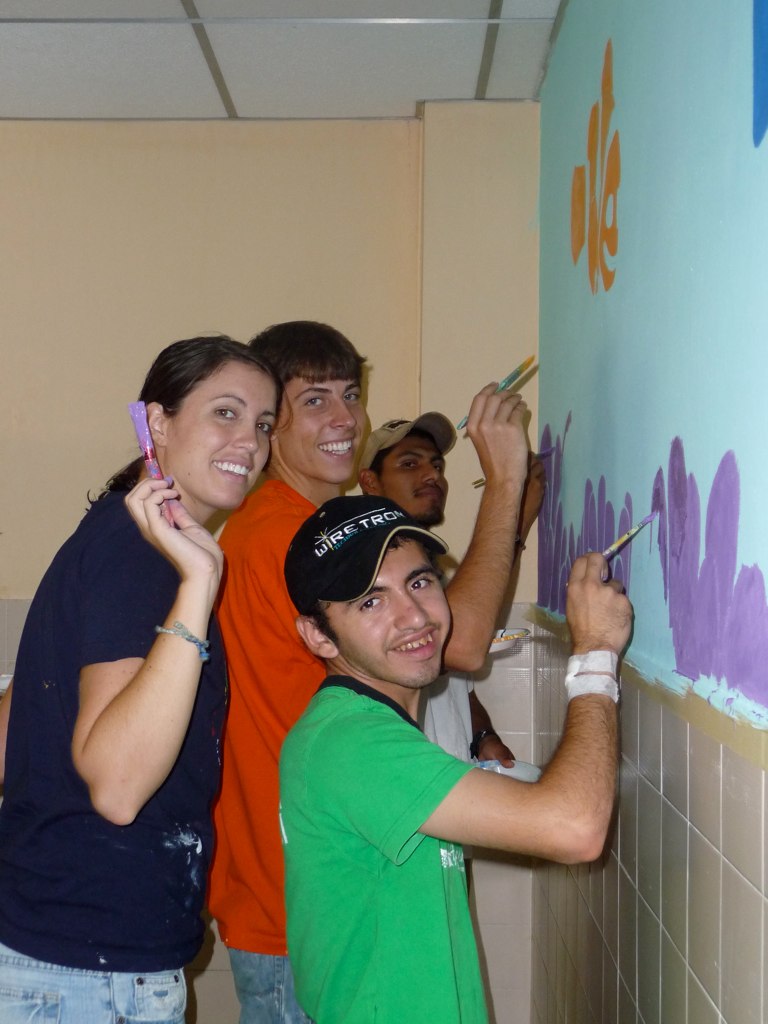
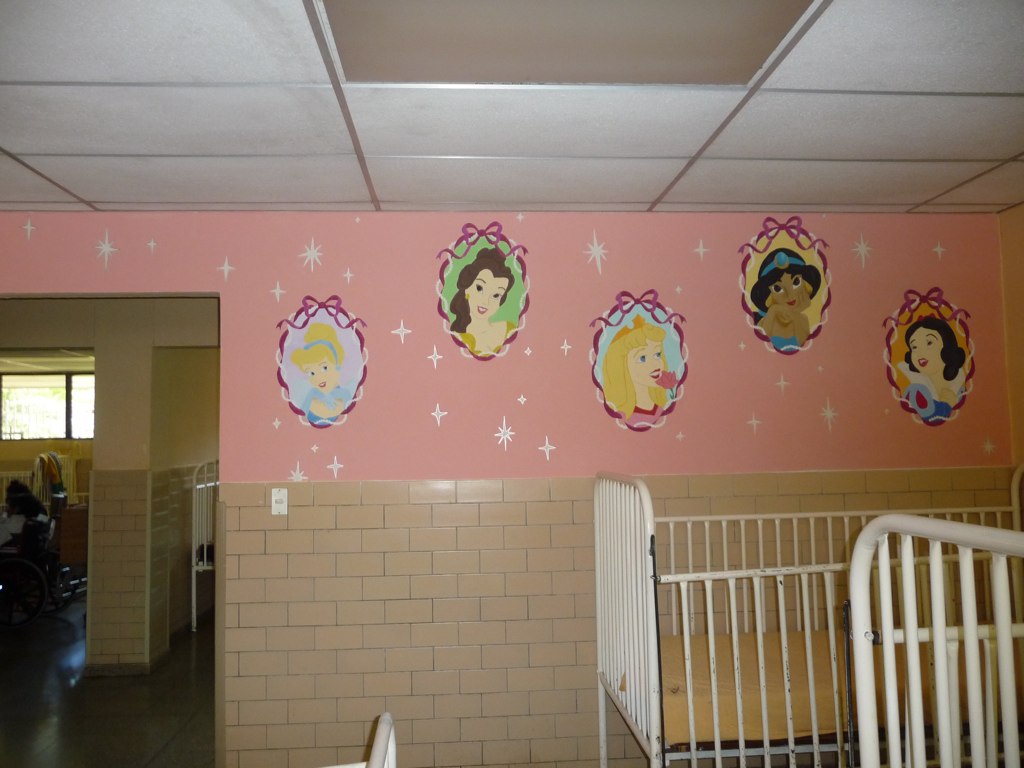
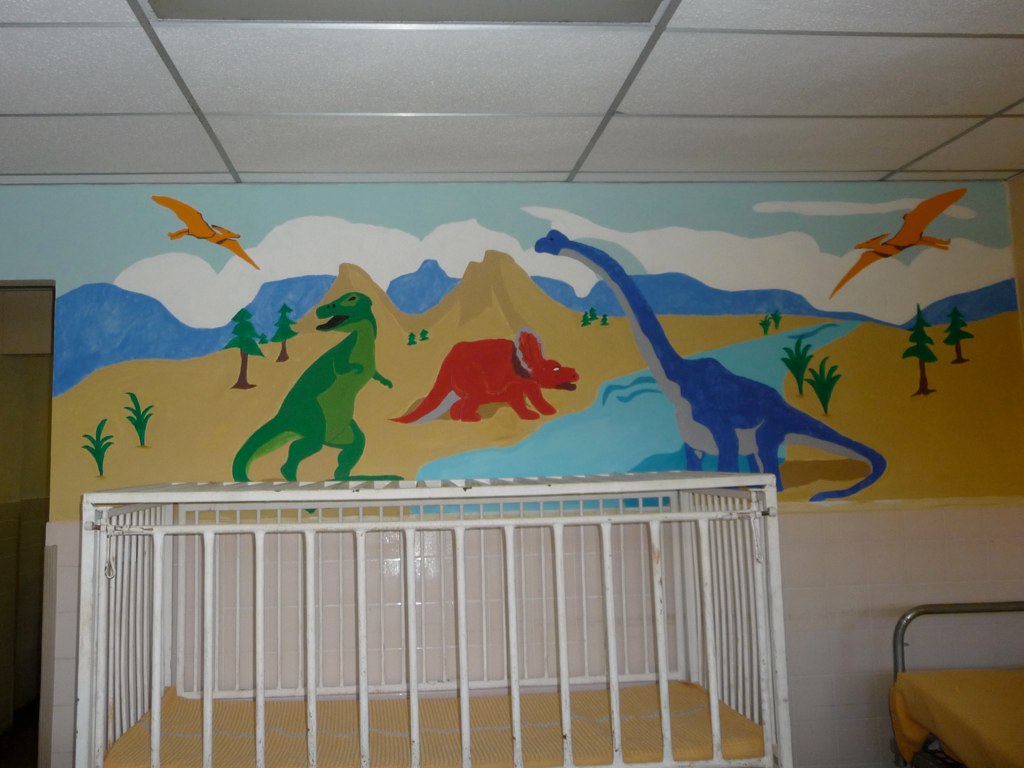
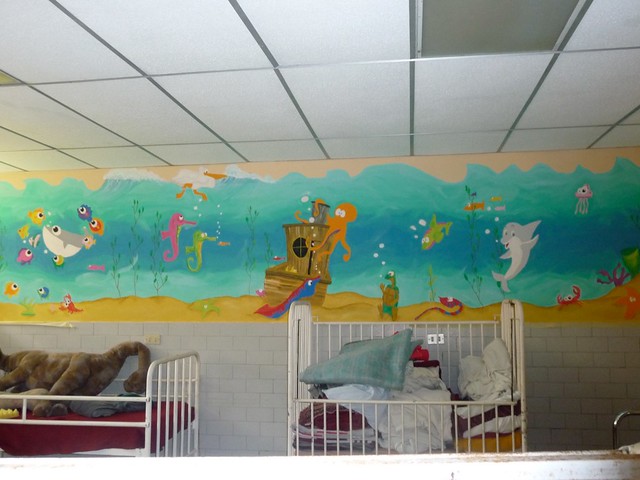
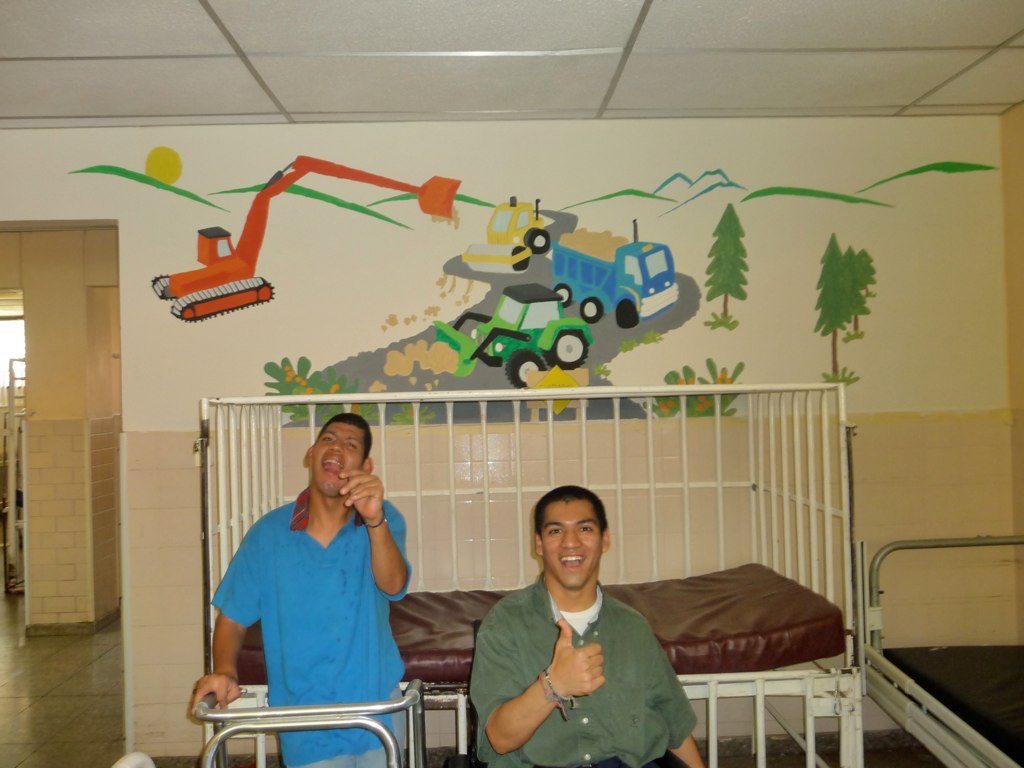
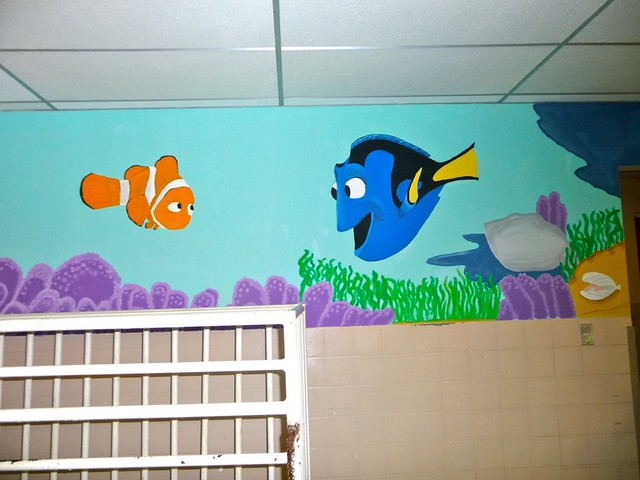
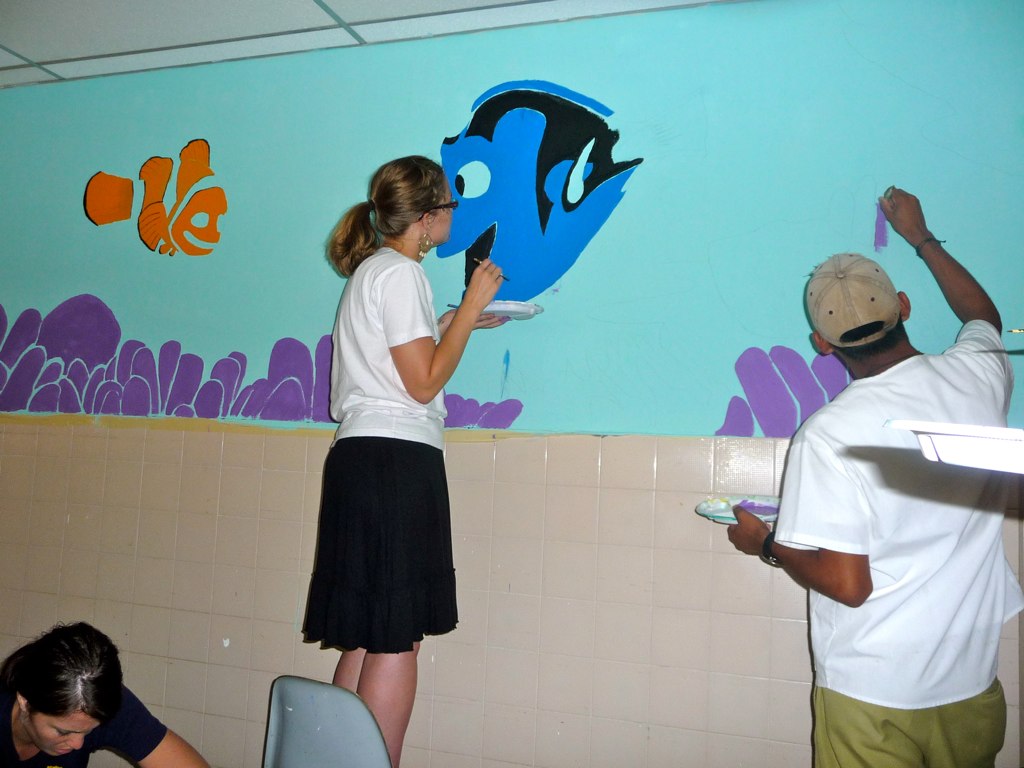
So if they are already content, what do we as volunteers add to their lives? Well, we improve the quality of their lives. We bring them individualized attention, which the overburdened workers cannot provide—mornings spent reading Twilight aloud with Antonia, blowing bubbles with Inecita, or practicing times tables with Carlos; we bring them something different in an otherwise mundane daily routine (most of the residents spend their entire lives at the Hogar, until they pass away)—a trash bag fashion show, a photo scavenger hunt, a Night of the Movie Stars—something fun to occasionally break up the monotony; we bring them colorful murals on their walls to brighten up those long hours that they sit and wait with their 150 peers to have their clothing changed or their teeth brushed.
But is this worthwhile? Is improving the quality of life for a few people a meaningful contribution to the world—a world filled with people who don’t even have the necessities of life?
As I’ve pondered these questions, I’ve often thought of a story told by one of the leaders of my church,
Dieter F. Uchtdorf. He talks about a moment when he and some other men were trying to move a heavy grand piano. They tried different, complicated systems for balancing the weight and maneuvering the bulky instrument—but to no avail. Finally, one of the men said, “Brethren, stand close together and lift where you stand.” When everybody just did what they could where they could, the piano rose off the floor, and they were able to move it together.
Elder Uchtdorf goes on to compare this situation to service in the church and the world; we can’t all do everything for everyone all the time—but we can look at the situations we are in and the skills and abilities that we have, and we can do our part by “lifting where we stand.” If we all do this, we will make the world a better place together.
The fact is, I can’t change the situations of the random children that I see on the street in El Salvador. I wish that I could help each of them, but it’s simply not in my power: I don’t know them—I have no connection to their families. The children that I do know and the place where I do have connections is the Hogar. And I initially got involved there because it utilized the experience and skills that I already had from working with kids with disabilities in the United States.
Are there places in El Salvador and throughout the world that could use more help than the Hogar? Yes. But for now, I have to lift where I stand.
I think this principle applies on a broader level as well. I may not always be in a position to run off to El Salvador each summer; my life will evolve as my family grows and my situations change. But in every stage of life, I can do what I can where I can. If I am serving in my community or as a member of the PTA, perhaps I won’t be serving people who "need" it as much as those at the Hogar—but if that’s where I stand at that period of my life, well, then that’s where I can lift.
For now, I’m grateful for the kids at the Hogar who I’ve gotten to know in this stage of my life. This is an overdone cliché, but they have lifted me much more than I have lifted them. Honestly. They are always happy; they are willing to love anyone; and they are oblivious to the inconsequential stresses of adult life. Whenever I am with them, I think, “Now what was I so worried about last week?” And it doesn’t seem to matter as much anymore.
They remind me of something that
Deborah once told me: I’m “too blessed to be stressed.”